

Home EV Chargers That Make the Most of Your Solar
Charge overnight from the grid or by day from your own panels. We supply and install wall-mounted chargers sized to your home’s power supply.
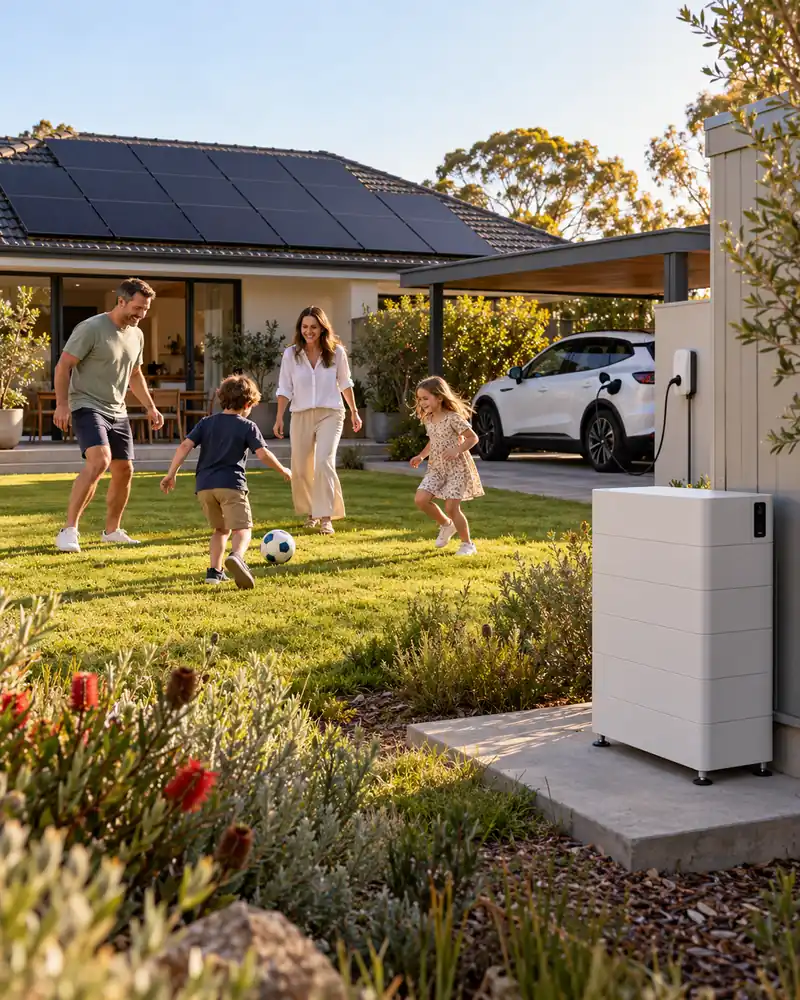
Most electric vehicle charging happens where the car sleeps. A home EV charger turns that habit into fast, safe, everyday charging, and paired with rooftop solar it can fill your car with energy your panels made for free.
Sunroof Solar supplies and installs wall-mounted chargers, sized to your home's power supply and set up to work with your solar and battery.
Charging Options at Home, From Slowest to Fastest
- Power point
- 2kW
- Single-phase wall charger, up to about
- 7kW
- Three-phase wall charger, up to
- 22kW
| Option | Typical power | Supply needed | Best for |
|---|---|---|---|
| Portable charger in a standard power point | Around 2 kW | Existing 10 A outlet | Short daily trips, occasional use |
| Single-phase wall charger | Up to about 7 kW | Dedicated 32 A circuit | Most homes and most drivers |
| Three-phase wall charger | 11 to 22 kW | Three-phase supply | High-mileage drivers, two EVs, cars with large onboard chargers |
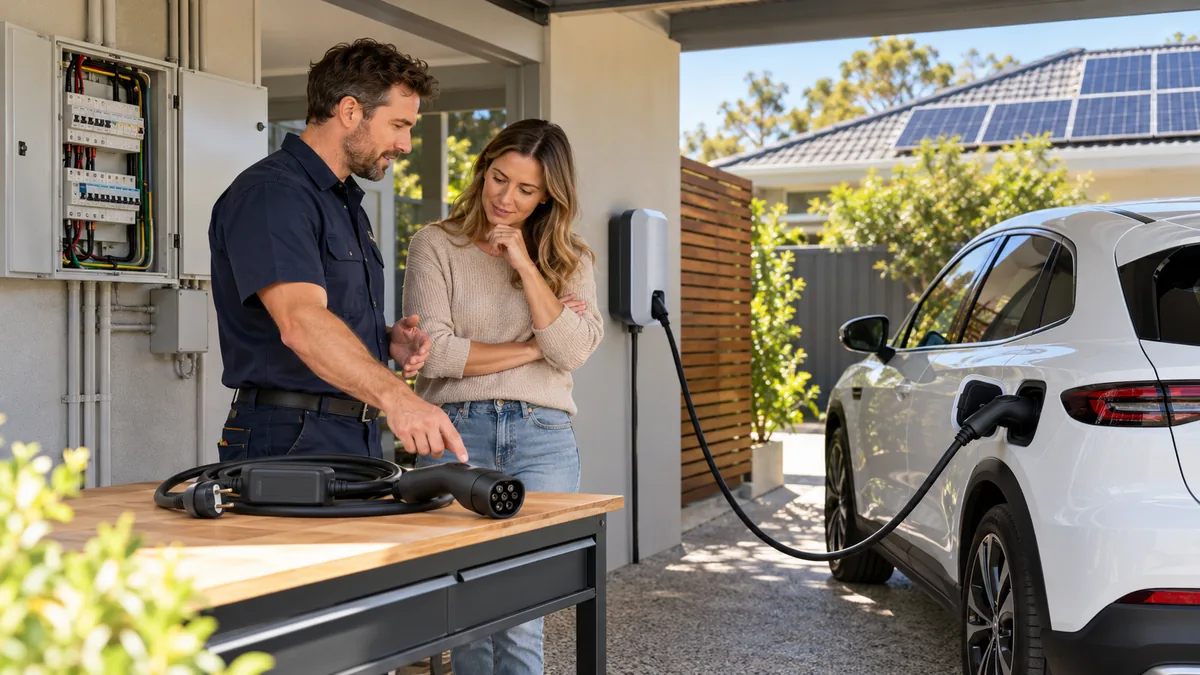
Most Perth homes have single-phase power, so a 7 kW EV charger at home is the usual choice. It refills a typical daily commute overnight with plenty to spare.
One detail often gets missed: your car's onboard charger sets the ceiling. If the car accepts 7 kW on AC, a 22 kW wall charger will not make it charge faster. We check your car's specification before recommending anything bigger.
Single Phase or Three Phase?
Three-phase charging only helps if your home already has three-phase supply and your car can use it. Upgrading supply just for charging can be a big job involving your network, so for most households a single-phase charger is the sensible answer.
If you do have three-phase power, many chargers can switch between single and three phase. That flexibility is handy when charging from solar, because small solar surpluses work better on a single phase.
Charging Your EV From Solar
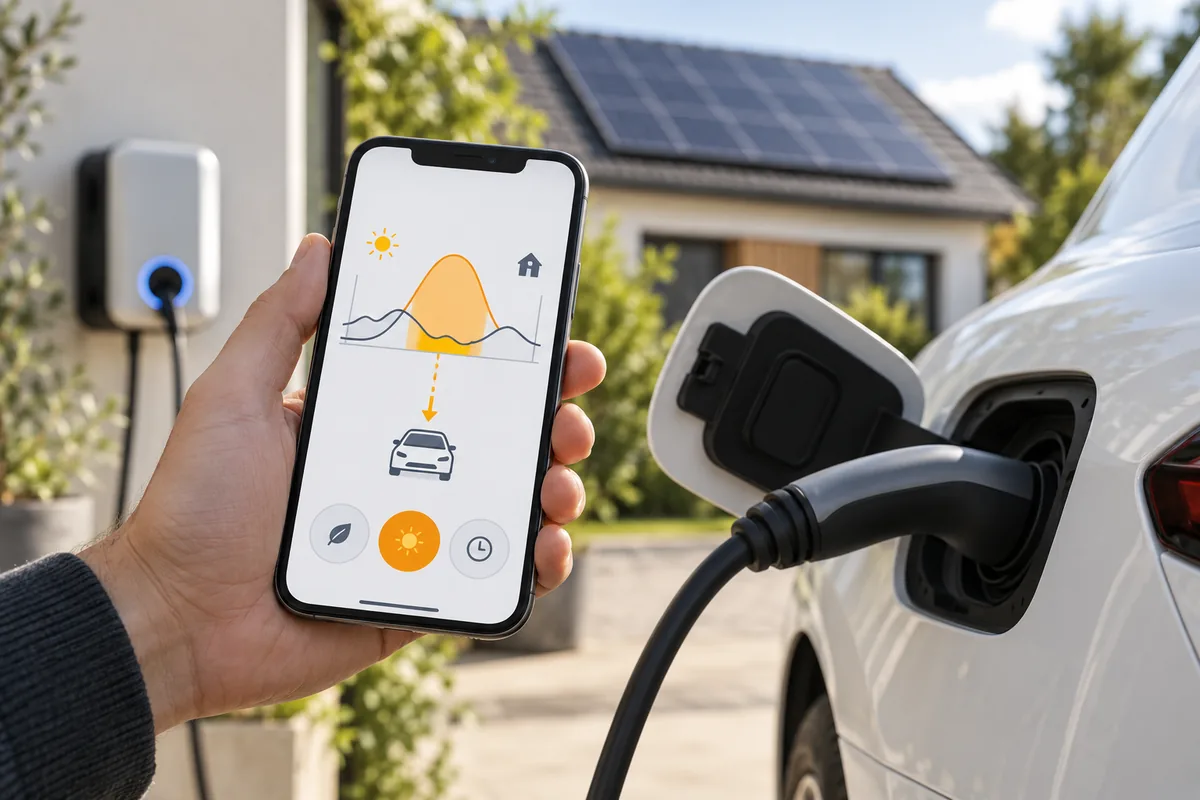
A smart EV charger can read how much spare solar your system is producing and charge the car with that surplus instead of exporting it for a few cents.
Common settings include:
- Solar only.The car charges only from surplus solar. Cheapest, but slow on cloudy days.
- Solar first, topped up from the grid.Uses solar when available and guarantees a minimum charge by a set time.
- Scheduled.Charges at the cheapest time of night on your tariff.
This works best if the car is home during the day. If it is parked at work, scheduled overnight charging on a suitable tariff may serve you better. We set the charger up around your actual week, not a brochure.
No solar yet? Start with our guide to home solar panels.
Not Sure What Suits Your Home?
Send a recent bill and we will come back with a written recommendation, including when solar and a battery do not make sense.
EV Chargers and Home Batteries
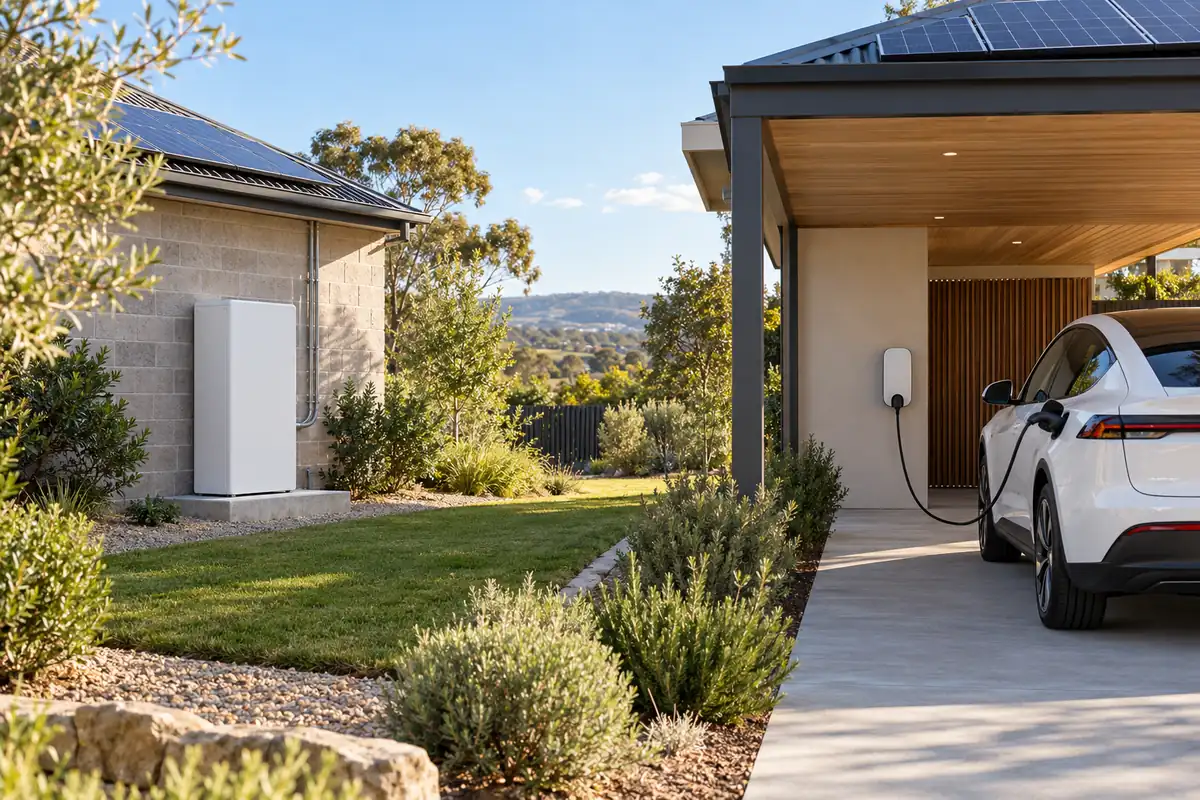
An EV battery is usually far larger than a home battery. Without the right settings, a car plugged in at night can drain your home battery in a short time and leave the house running on the grid.
We configure the charger and battery to work together, so the home battery covers the house and the car charges from solar or off-peak power. If you are planning a battery as well, see our solar batteries page.
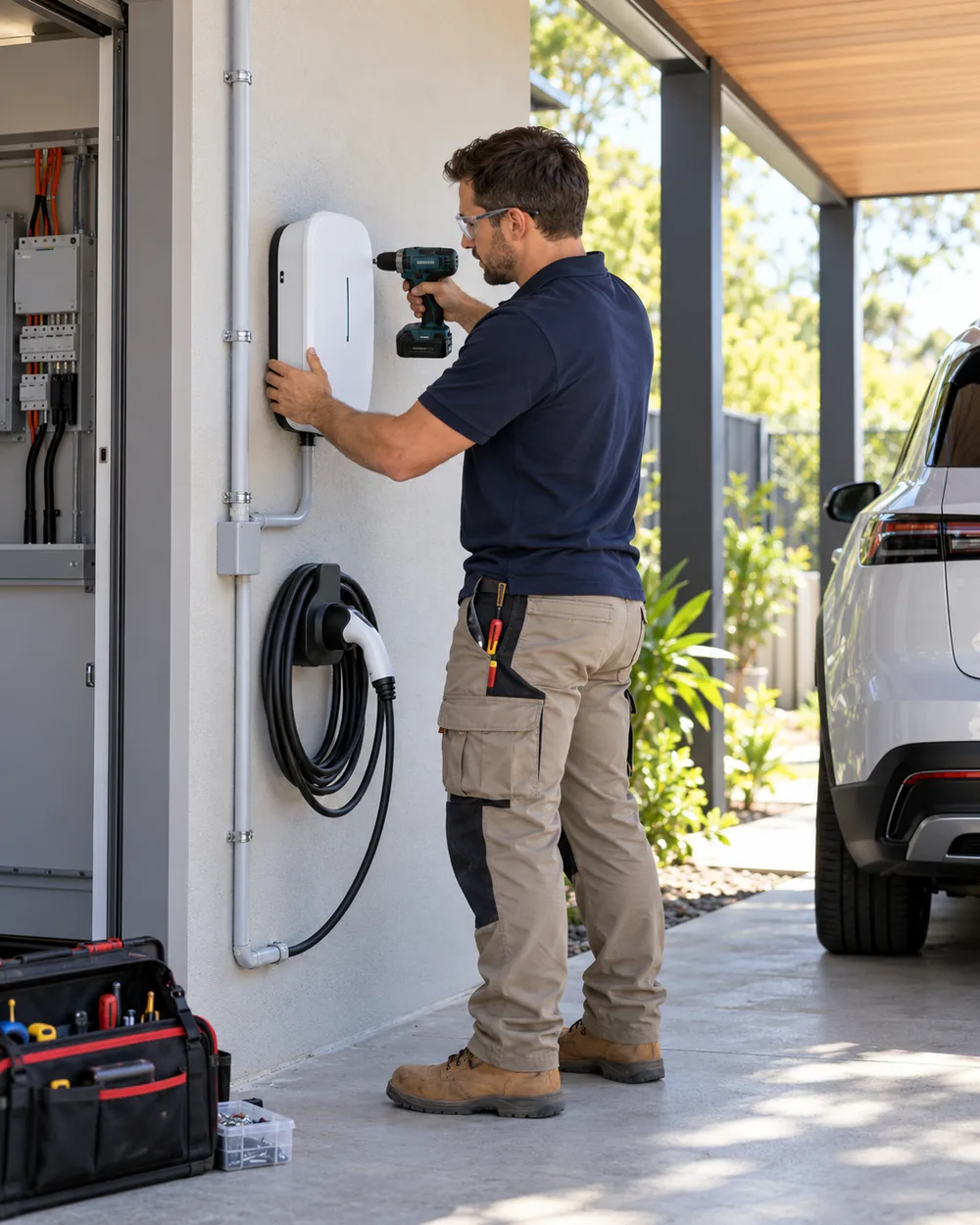
What a Proper Installation Involves
In WA, a home EV charger must be installed by a licensed electrician, to the Wiring Rules (AS/NZS 3000) and the manufacturer's instructions. When you install an EV charger with us, we:
- Check your supply and switchboard.We confirm single or three phase, the spare capacity on your main supply and whether the board has room for a new protected circuit.
- Plan the location.Close to where you park, with the cable reaching the car's charge port comfortably.
- Run a dedicated circuit.Correctly sized cabling and protection from the switchboard to the charger.
- Mount and connect.The charger is fixed to the wall or a pedestal and connected.
- Commission and set up.We test the circuit, connect the charger app and set solar or scheduled charging.
- Hand over the paperwork.You get your state's electrical compliance certificate.
Most installations take a few hours. Older switchboards sometimes need an upgrade first, and we will tell you before work starts.
Check where we install before you book.
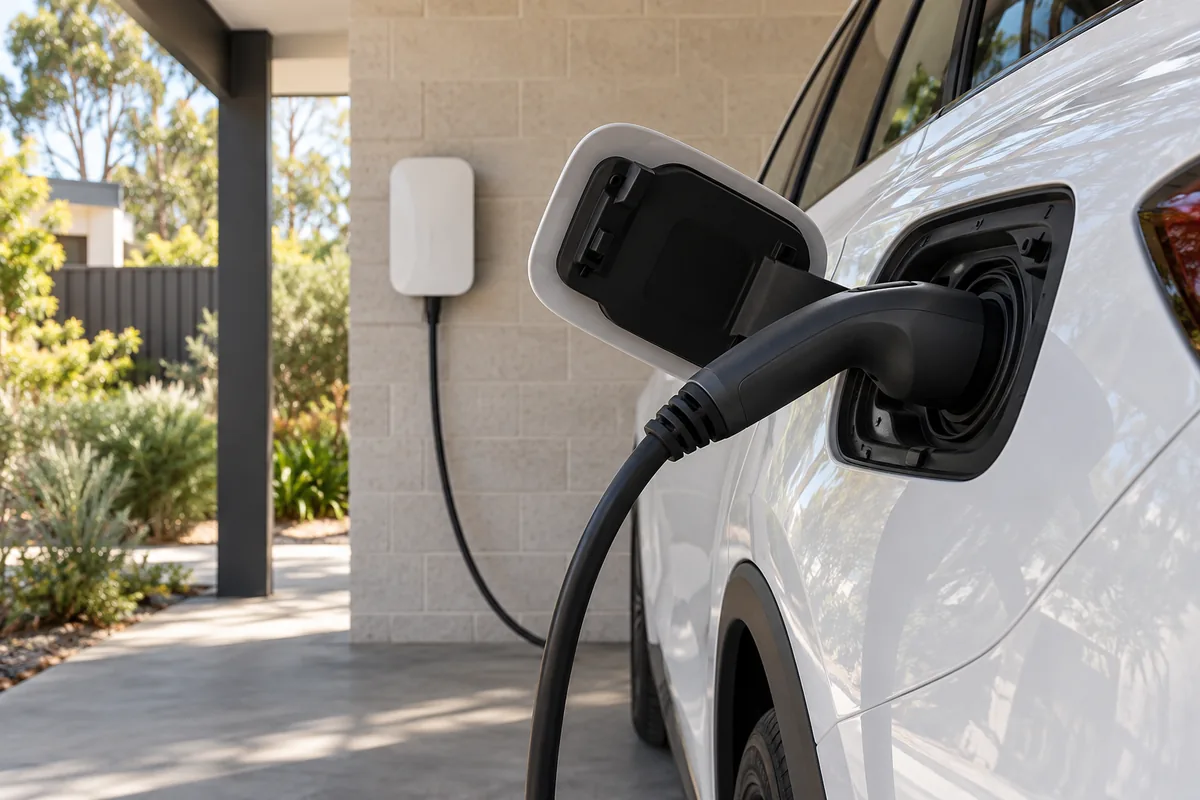
Choosing a Home EV Charger
The features worth paying for depend on how you drive and what is on your roof:
- Solar-aware charging, if you have or plan solar
- Load management, so the charger backs off when the house is using a lot of power
- Type 2 connector, the standard for AC charging in WA
- Tethered or untethered. A fixed cable is convenient; a socket lets you use your own cable
- Outdoor rating, if it will be mounted outside
- App control and scheduling, for tariff-based charging
Want This Worked Out for Your Roof?
A site assessment checks your roof, switchboard and network rules before any design is drawn.
Help With the Upfront Cost
There is currently no federal or WA rebate for home EV chargers. If you add solar or a battery at the same time, those parts can still qualify for the federal discounts and, for batteries, the WA battery rebate. Read more on our rebates page.
Frequently Asked Questions
Do I Need a Home EV Charger, or Can I Use a Power Point?
A standard power point works for short daily distances, but it is slow and puts a long continuous load on that outlet. A dedicated wall charger is faster and designed for the job.
How Long Does It Take to Install an EV Charger?
Usually a few hours for a straightforward single-phase installation near the switchboard. Long cable runs or a switchboard upgrade take longer.
Can I Charge My EV Entirely From Solar?
If the car is home during the day and your system has enough surplus, a large share of your charging can come from solar. Winter and cloudy weeks will usually need some grid top-ups.
Is a 7 kW EV Charger Enough?
For most drivers, yes. It refills a normal day's driving overnight. Faster charging mainly helps if you drive long distances daily or share one charger between two cars.
Will My Car Work With Any Charger?
Most EVs sold in Perth use the Type 2 connector for AC charging. We confirm compatibility with your model before installation.
Plan Your Home Charging
Tell us what you drive, how far you travel and whether you have solar. We will recommend a charger and settings that suit your week.