

Solar Battery Installation: Where It Goes and How It Connects
Australian standards and WA network rules decide where a battery can be mounted and who can fit it. Get them right and it is safe, rebate-eligible and easy to service.
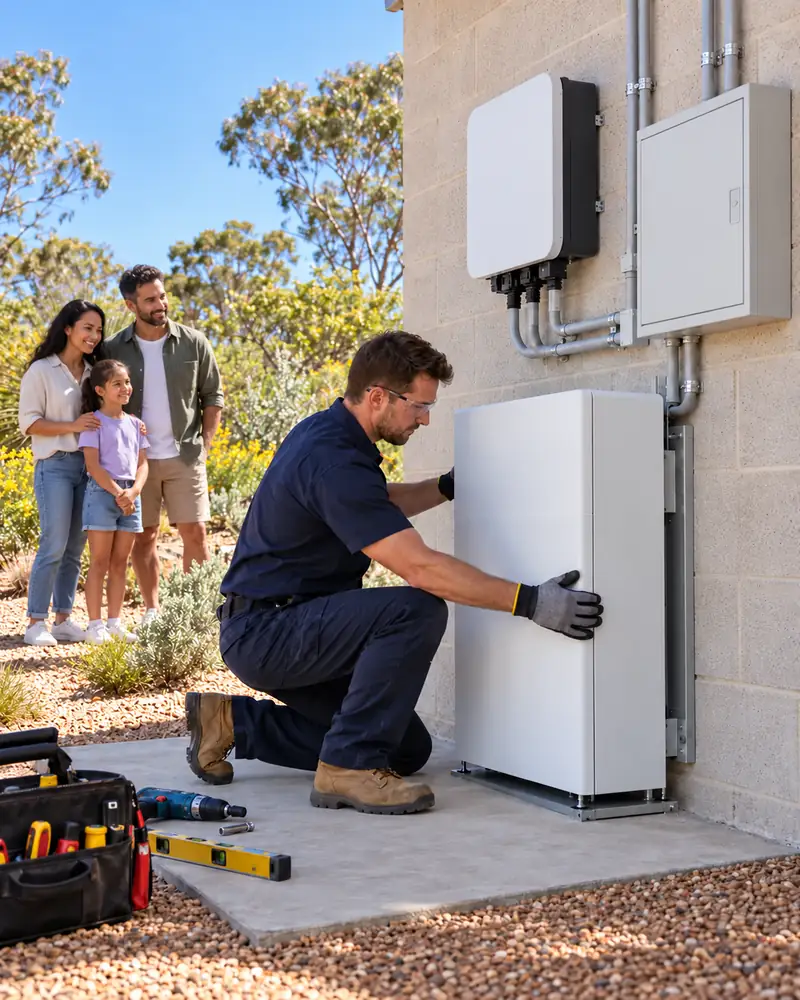
A good solar battery installation starts long before anyone picks up a drill. Australian standards and WA network rules control where a battery can be mounted, how it connects to your solar and switchboard, and who is allowed to install it. Get those right and the battery is safe, eligible for rebates and easy to service.
This page explains the rules in plain English, how we add a battery to an existing system, and what happens on the day.
Still choosing a battery? Start with our solar batteries guide.
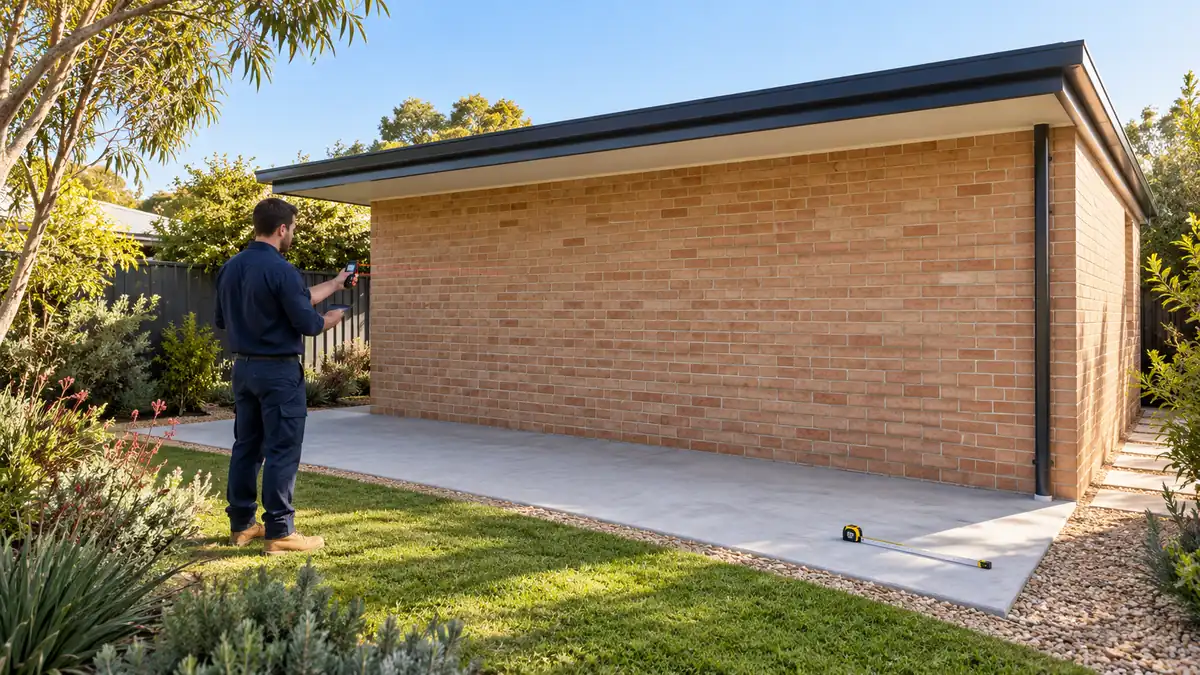
Where a Battery Can and Cannot Be Installed
The main standard is AS/NZS 5139, which sets safety and location rules for home battery systems. In short, a battery must not be installed:
- Inside a habitable room, such as a bedroom, living room, study or kitchen
- In a ceiling space or wall cavity
- On a roof, unless specifically allowed
- Under stairways or access walkways, or in an escape route
- Within 600 mm of an exit, or of a window or vent that serves a habitable room
An amendment published in December 2025 added a practical exception: a battery can now sit within 600 mm of a garage opening wider than 900 mm, provided safe exit is kept clear.
If a habitable room sits on the other side of the wall, a non-combustible barrier may be needed between the battery and that wall. In a garage, the battery may also need bollards or another barrier so a car cannot hit it.
That is why a garage wall or a sheltered outside wall is the most common spot. Shade matters too. Batteries work best and age more slowly away from afternoon sun.
Solar Battery Installation Requirements for the Rebate
- Minimum usable capacity
- 5kWh
- Support applies up to
- 50kWh
- System limit
- 100kWh
To qualify for the federal Cheaper Home Batteries Program, the installation must meet the Clean Energy Regulator's conditions, including:
| Requirement | Detail |
|---|---|
| Approved battery | Listed on the Clean Energy Council approved product list |
| Accredited installer | Installed by an installer accredited with Solar Accreditation Australia and endorsed for batteries |
| VPP capability | On-grid systems must be technically able to join a virtual power plant. Joining is optional. |
| Capacity | At least 5 kWh usable; support applies up to 50 kWh, within a 100 kWh system limit |
| Whole-system sign-off | When adding to an existing system, the accredited installer re-certifies the whole system as safe and compliant |
What the discount is worth for your battery size is set out in our solar battery rebate guide.
Your state also has its own electrical safety rules and paperwork. In NSW that means a Certificate of Compliance for Electrical Work. In Victoria it is a Certificate of Electrical Safety. Western Australia adds network rules for new and upgraded systems, covered on our Perth page.
How to Add a Battery to an Existing Solar System
Most homes with solar can add a battery. The question is how it connects.
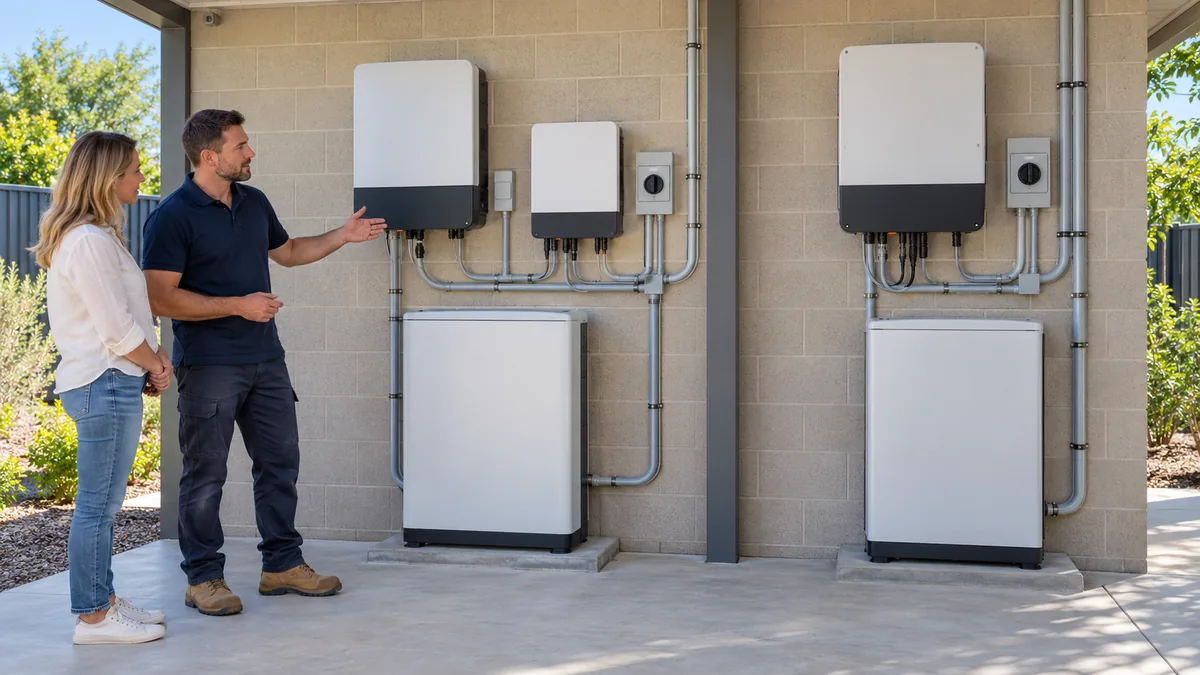
Option 1: AC-coupled battery. The battery comes with its own inverter and connects next to your current solar inverter. Your existing system keeps running as it is. This is often the simplest path when your solar inverter is in good shape.
Option 2: Replace the solar inverter with a hybrid. A new hybrid inverter runs both the panels and the battery. This suits older systems where the original inverter is nearing the end of its life, or where the existing inverter is no longer on the approved list.
The Clean Energy Regulator's rules say other inverters on site do not need to be VPP-capable. If the battery connects through an existing hybrid inverter, that inverter must be on the approved list now or have been listed when the solar was commissioned.
We check your inverter model, its age, your switchboard and your roof's spare capacity before recommending either path.
Not Sure What Suits Your Home?
Send a recent bill and we will come back with a written recommendation, including when solar and a battery do not make sense.
Our Solar Battery Installation Process
- Usage and system review.We read your bills or interval data and check your existing solar, if you have it.
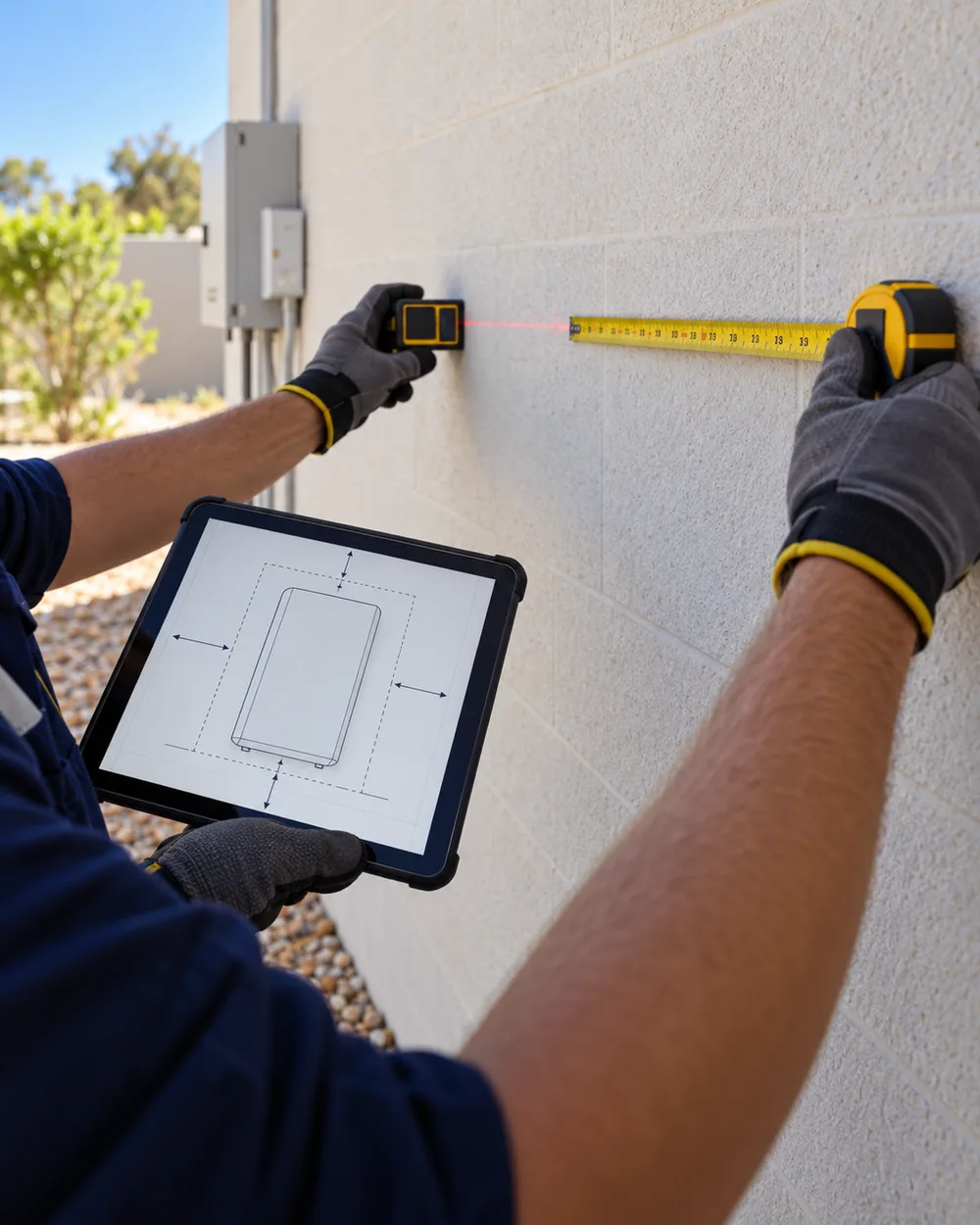
- Site check.We find a compliant location, measure clearances, check the switchboard and plan the cable route.
- Design and proposal.You receive the battery and inverter models, the location marked on a plan, the backup circuits we propose and the expected rebate.
- Network approval.We apply to your distribution network, which may set export limits or settings.
- Installation day.Our accredited installers mount the battery, fit any barriers or bollards, connect it to the inverter and switchboard, and set up backup circuits if included.
- Commissioning.We test the system, set charge and discharge settings, connect monitoring and walk you through it.
Most installations are done in a day. A switchboard upgrade or a long cable run can add time.
Adding panels at the same time? See our solar panel installation process.
Backup Circuits Are a Design Decision
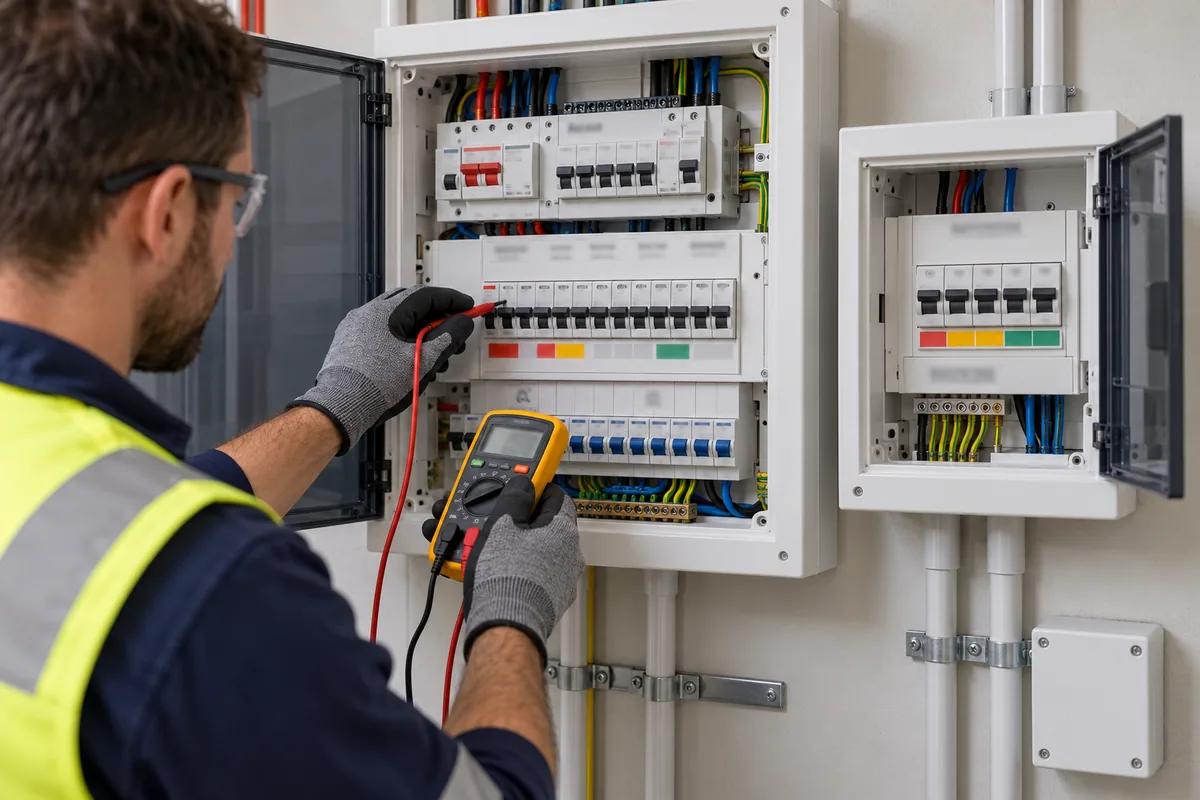
If you want power during outages, we decide with you which circuits will be backed up. Common choices are the fridge, lights, internet and a medical device. The inverter's continuous output limits how much can run at once, and the switchboard wiring decides which circuits are included. We confirm the backup scope in writing before installation.
Why Installation Quality Matters With Batteries
A battery cycles almost every day for years. Poor cable sizing, missing protection or a hot, cramped location can shorten its life and void the warranty. Before you sign, ask any installer:
- Where exactly will the battery go, and which rules does that spot meet?
- Which circuits will be backed up, and is that in writing?
- Who is the accredited installer, and can I check their battery endorsement?
- What settings will the battery use, and can I change them?
Frequently Asked Questions
How Long Does It Take to Install a Solar Battery?
The installation itself usually takes a day. Allow time before that for design, network approval and any switchboard work.
Can a Battery Be Installed in My Garage?
Often, yes. Garages are non-habitable, but clearance, barrier and vehicle protection rules still apply. We measure before we commit to a spot.
Can I Install a Solar Battery Myself?
No. Battery installation is licensed electrical work, and only installs by an accredited installer with battery endorsement qualify for the federal discount.
Will I Need a Switchboard Upgrade?
Sometimes. Older boards may lack the space or protection devices needed. We check during the site visit and tell you before you commit.
What Are the Solar Battery Installation Regulations in NSW?
NSW follows AS/NZS 5139 and the Wiring Rules like other states. Work must be done by a licensed electrician, and you should receive a Certificate of Compliance for Electrical Work when it is finished.
Ready to Add Storage?
Tell us about your home and your current solar. We will find a compliant location, explain your options and confirm the backup scope in writing.