

Solar Battery Systems for Perth Homes
A battery stores your daytime surplus for the evening. Getting it right comes down to sizing, the inverter it pairs with and being honest about blackouts.
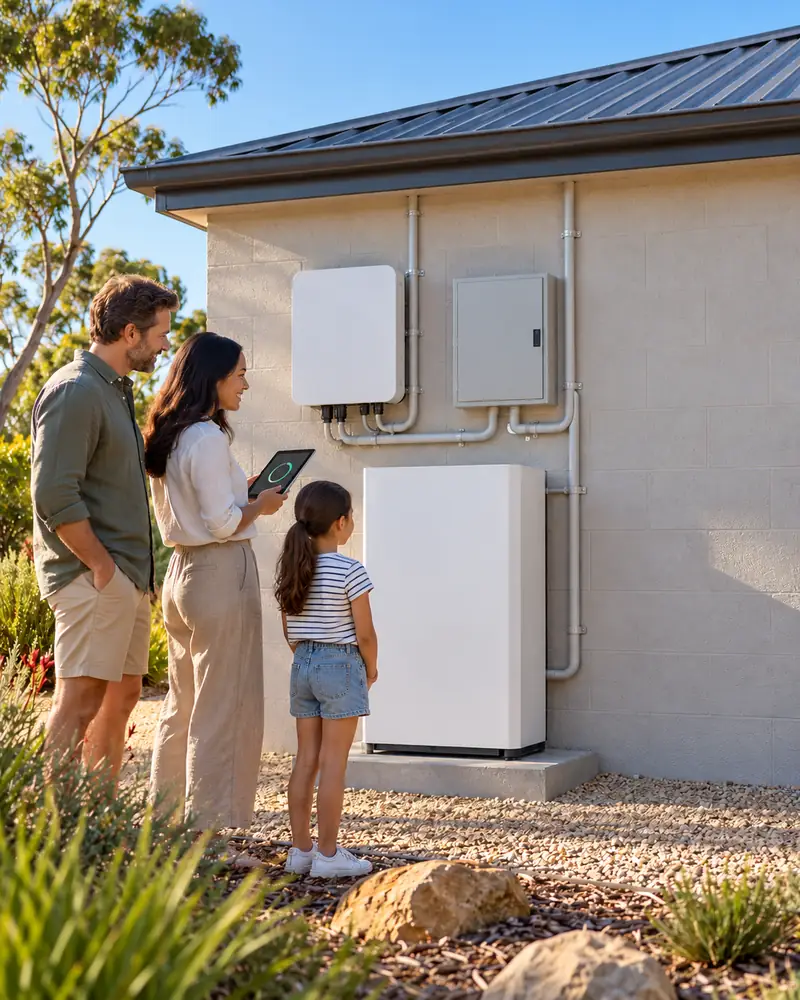
A solar battery stores the surplus energy your panels make during the day so you can use it at night instead of buying it from the grid. That is the whole idea. Getting it right comes down to sizing, the inverter it pairs with, and being clear about what it will and will not do in a blackout.
How a Home Battery for Solar Works
On a sunny day, a typical rooftop system makes more power around midday than the house uses. Without storage, that surplus flows to the grid for a small feed-in credit.
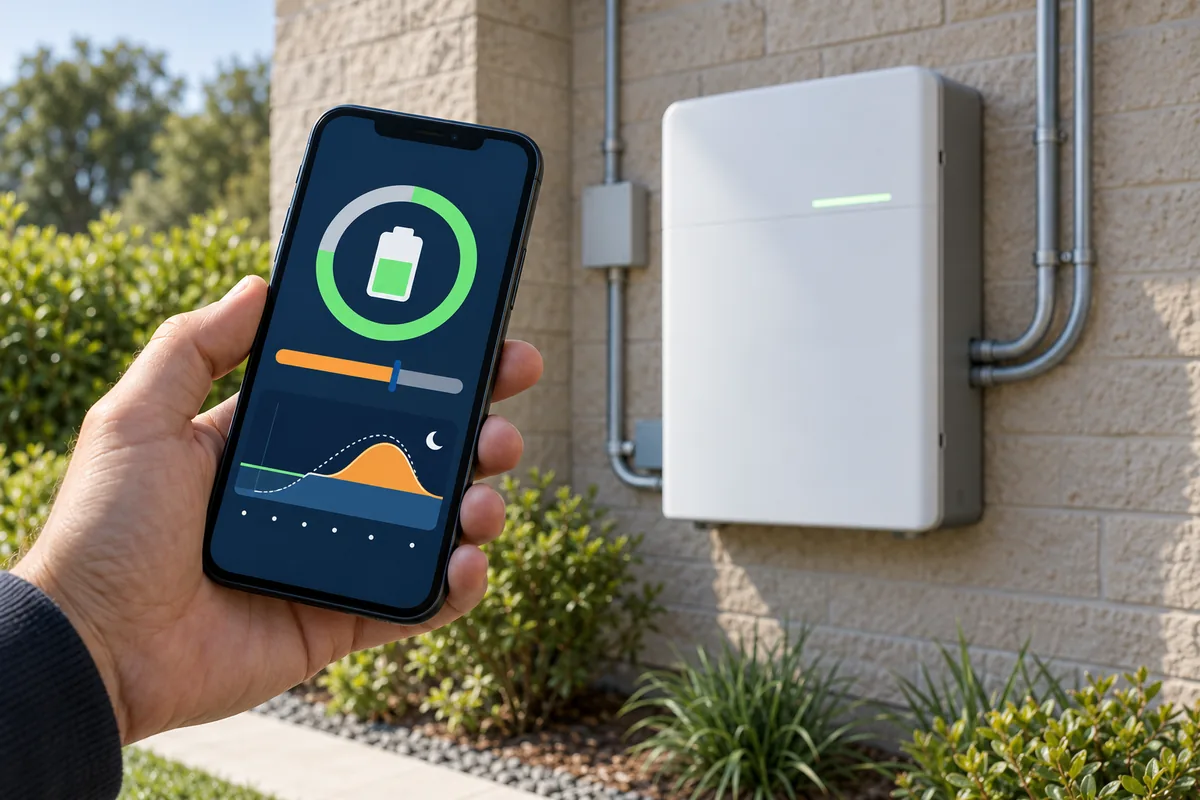
With a battery, the surplus charges the battery first. After sunset, the battery discharges to cover your evening load: cooking, lighting, air conditioning, TV. You only buy from the grid once the battery runs low or your use spikes above what it can deliver.
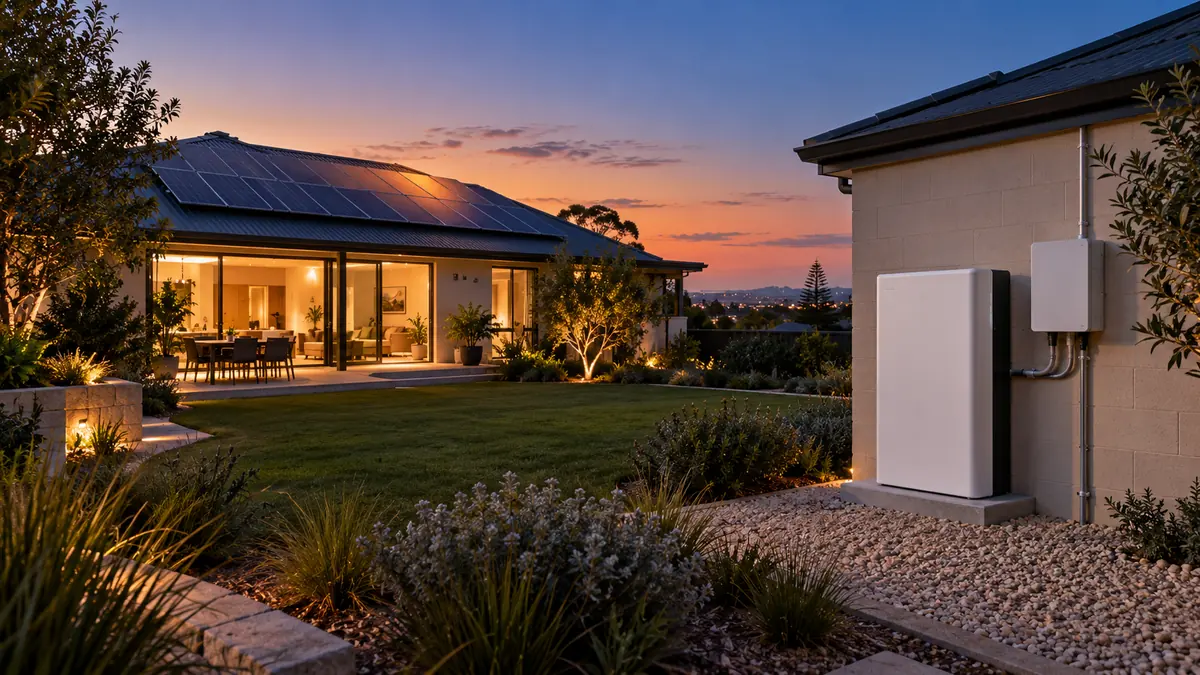
Some batteries can also take part in a virtual power plant (VPP), where a provider occasionally draws on your stored energy when the grid needs it and pays you for it.
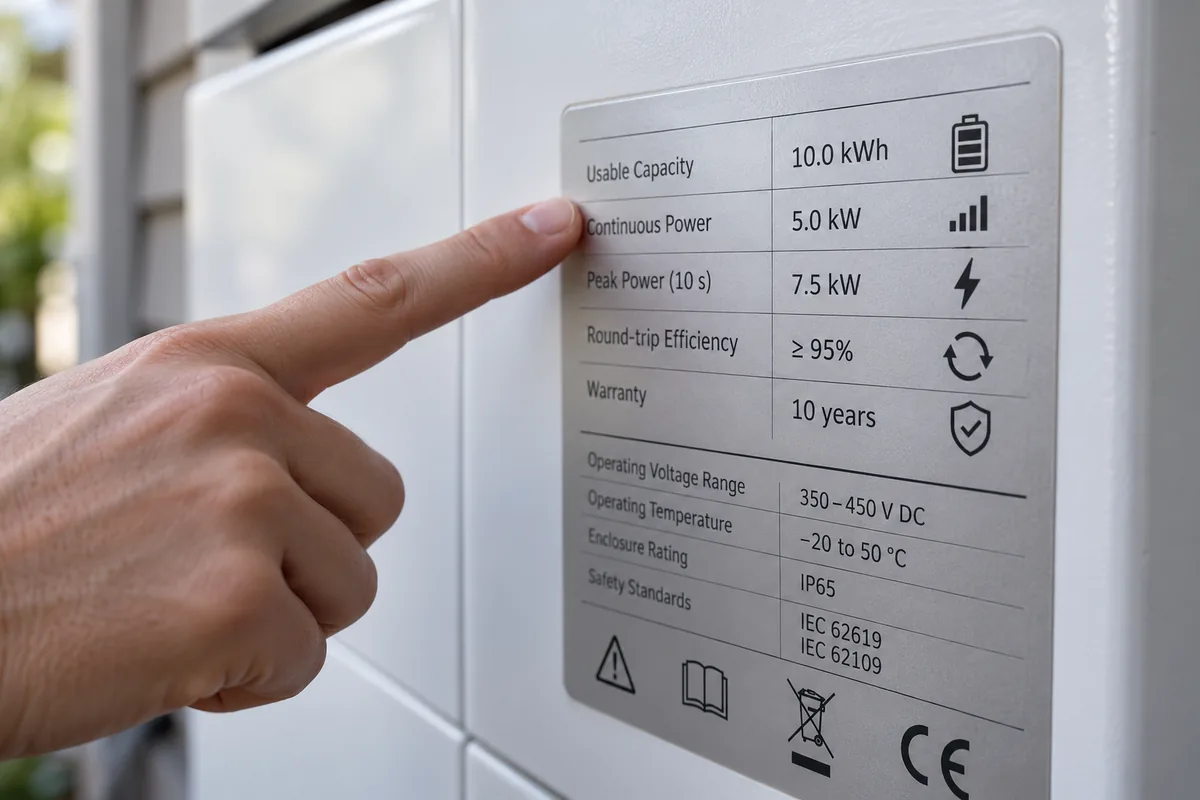
The Numbers on a Solar Battery Spec Sheet
| Spec | What it means for you |
|---|---|
| Usable capacity (kWh) | How much energy you can actually draw. This is the figure rebates are based on, not the total or nominal capacity. |
| Continuous power (kW) | How much the battery can supply at once. This decides whether it can run your air conditioner and oven together. |
| Peak power (kW) | A short burst for motors and appliances that surge on start-up |
| Round-trip efficiency (%) | How much energy you get back out after storing it. Some is always lost as heat. |
| Warranty | Years of cover plus a throughput or cycle limit. Read both. |
| Backup capability | Whether the system can power circuits in an outage, and how it switches over |
Most home batteries sold in Perth now use lithium iron phosphate (LFP) chemistry. LFP is valued for thermal stability and a long cycle life, which suits a battery that cycles almost every day.
AC-Coupled or DC-Coupled?
- DC-coupled (hybrid inverter).One hybrid inverter runs the panels and the battery. It is efficient and tidy, and usually the right choice when you install solar and storage together.
- AC-coupled.The battery has its own inverter and connects alongside an existing solar inverter. This is common when adding storage to a system that is already on the roof.
Which one suits you depends on your current inverter, its age and its approval status. We cover that on our solar battery installation page.
Not Sure What Suits Your Home?
Send a recent bill and we will come back with a written recommendation, including when solar and a battery do not make sense.
Sizing a Solar Battery for Home Use
Battery size should follow your evening and overnight usage, not the biggest number on a brochure.
- Evening load.We look at how much you use between sunset and the next morning's solar.
- Spare solar.A battery only helps if your panels have surplus to fill it. A small system cannot charge a large battery on most winter days.
- Future loads.An EV, a heat pump or moving off gas will lift evening use.
- The rebate taper.Since 1 May 2026, the federal discount applies in full only to the first 14 kWh of usable capacity, then at 60% up to 28 kWh and 15% up to 50 kWh. Beyond 14 kWh, every extra kilowatt-hour costs you more net.
If your panels cannot fill a battery most days, start with our guide to home solar panels. An EV charger adds evening load too, so plan both together.
Oversizing is the most common mistake we see in quotes. A battery that never fully charges or never fully discharges is capacity you paid for and rarely use.
What a Battery Does in a Blackout, Honestly
Many buyers assume any solar battery system keeps the lights on during an outage. That is not automatic.
Backup depends on three separate things:
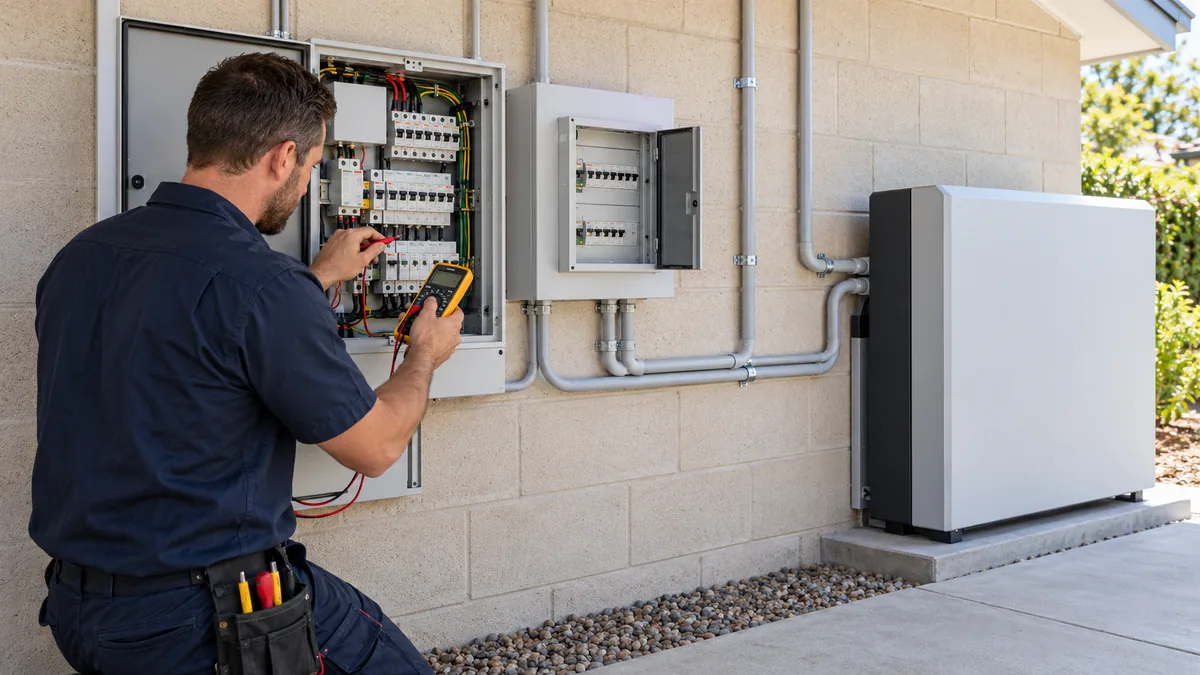
- The inverter's continuous outputsets how much can run at the same time.
- The switchboard wiringdecides which circuits are connected to backup at all.
- Battery capacitysets how long those circuits can run.
A larger battery extends the time. It does not add circuits or increase how much can run at once.
| Usable capacity | Typical backup scope* |
|---|---|
| Around 5 kWh | Essential circuits for a few hours |
| Around 10 kWh | Selected circuits for several hours |
| Around 13 to 14 kWh | Selected circuits overnight |
| Around 20 kWh and above | Selected circuits for longer periods |
*Scope depends on inverter output, switchboard configuration and how much you run at once. Some systems offer no backup. Your installer will confirm the achievable backup scope for your home in writing.
We never promise to back up a whole house from a battery's size alone. We design for the circuits that matter to you, such as the fridge, lights, internet and a medical device, and put that in writing.
Virtual Power Plants: Worth Joining?
To qualify for the federal battery discount, an on-grid battery must be VPP-capable. Joining a VPP is optional under the federal program.
Some state incentives go further. In Western Australia, the state battery rebate requires the battery to be enrolled in an approved VPP.
In Perth? See how the WA scheme works on our Perth page.
A VPP can add income, but read the terms: how often the provider can draw on your battery, whether it keeps a reserve for you, and how you leave. We are happy to walk you through any offer.
Want This Worked Out for Your Roof?
A site assessment checks your roof, switchboard and network rules before any design is drawn.
The Federal Battery Discount
- Around, an eligible battery
- 30%off
- Full rate applies up to
- 14kWh
- Next step-down
- 1 Jan 2027
The Cheaper Home Batteries Program gives around 30% off an eligible battery at the point of sale, delivered through certificates. The battery must be on the Clean Energy Council approved list and installed by an installer with battery accreditation.
The value per kilowatt-hour falls on 1 January 2027 and every six months after. Our solar battery rebate guide shows the full schedule and worked examples.
Is a Solar Battery Right for You?
A battery tends to make the most sense when:
- You export a large share of your solar during the day
- Your evening and overnight usage is high
- Your feed-in credit is low compared with what you pay for grid power
- You value backup for selected circuits
- You qualify for a state incentive on top of the federal discount
It makes less sense when your solar system is small, you use most of your solar during the day already, or your roof cannot fit more panels. In those cases we may suggest more panels first, or waiting.
Frequently Asked Questions
Can I Add a Battery to My Existing Solar?
Usually, yes. It depends on your inverter and on finding a compliant battery location. See solar battery installation.
How Long Does a Home Battery Last?
Check the warranty for both the years covered and the throughput or cycle limit. Whichever is reached first ends the cover.
Do I Need Solar to Get a Battery?
Batteries are almost always paired with solar, because that is where the savings come from. Rebate rules on solar connection are set by the program, so we confirm eligibility for your home before quoting.
Can a Battery Go Inside My House?
Not in a living space. Australian Standard AS/NZS 5139 bans batteries from habitable rooms, ceiling spaces and wall cavities, among other places. Garages and suitable outside walls are the usual spots.
Will My Battery Charge From the Grid?
Some systems can charge from cheap off-peak grid power, depending on your tariff and settings. We set this up only when it adds value.
Talk to Us About Storage
Share a recent bill and we will tell you whether a battery suits your home, what size makes sense and which circuits we would back up.